
-
 Media gallery

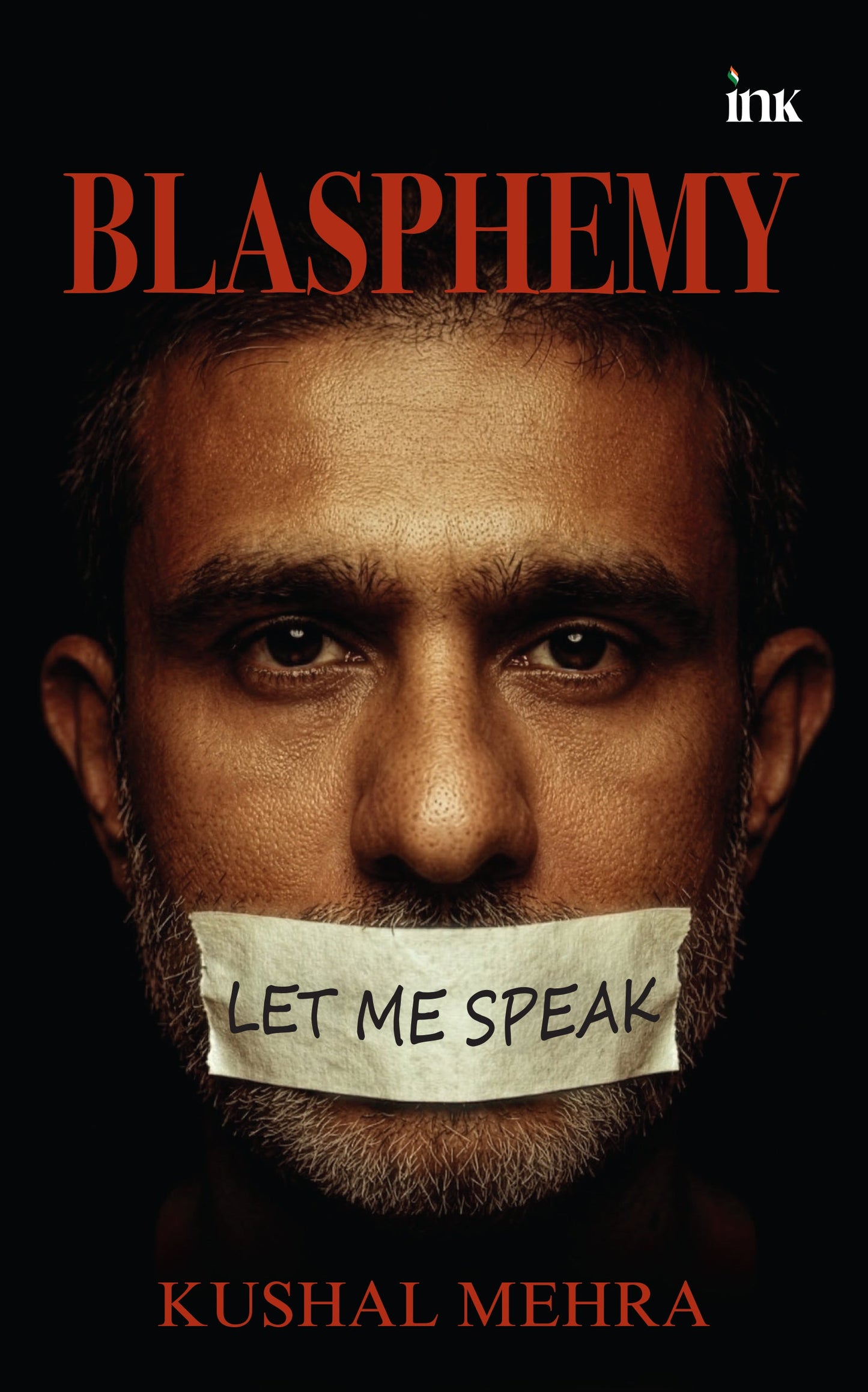
BluOne Ink Blasphemy: Let Me Speak by Kushal Mehra
- Regular price
- $23.03
- Regular price
-
$41.87 - Sale price
- $23.03
- Unit price
- per
FREE shipping on orders above $55.00 USD
Couldn't load pickup availability
Guaranteed safe checkout
Shipping
| Cart Value (USD) |
Greater than $55 |
$35-$54.99 | $25-$34.99 | $15-$24.99 | Less than $14.99 |
|---|---|---|---|---|---|
| Shipping Rates(USD) |
FREE | $5.97 | $9.97 | $11.97 | $16.97 |
Enjoy hassle-free 14-day returns. Learn more in our Return Policy.


Free Returns

& authenticity

transactions
Notified by email when this product becomes available
- Description
BluOne Ink Blasphemy: Let Me Speak by Kushal Mehra
Description:
In today’s India, two words can end careers, ignite mobs, and silence debate: “hurt sentiments.” But when did questioning become a crime? And how did a civilisation that once celebrated fearless philosophical debate become a society walking on eggshells? In Blasphemy: Let Me Speak, Kushal Mehra takes on one of the most contentious issues of our time—the idea of blasphemy itself. Drawing from history, philosophy, law, and contemporary politics, Mehra argues that the very notion of blasphemy is fundamentally alien to India’s indigenous intellectual traditions. For millennia, Indian thought thrived on argument, skepticism, and dissent from the audacious materialism of the Cārvākas to the pluralism of the dharmic darśanas. Questioning was not punished; it was celebrated. So how did a culture of open inquiry transform into a culture of outrage? Through a sharp and provocative analysis, this book traces the historical roots of blasphemy, its entry into India’s legal framework under colonial rule, and its modern use as a tool to silence free speech. Examining landmark legal cases, religious sensitivities, and the growing climate of censorship, Mehra confronts a difficult question: Can a society truly progress if its ideas cannot be challenged? Bold, unapologetic, and intellectually fearless, Blasphemy: Let Me Speak is not an attack on faith—it is a defense of freedom. It is a call to reclaim India’s ancient spirit of debate, where ideas were tested through dialogue, not suppressed through intimidation. Because a civilisation that stops questioning eventually stops thinking. Endorsements: ‘Kushal rejects the notion of mere “tolerance”. He demands active blasphemy as the only antidote to civilization ossification, especially to a new generation that associates argument with offence and censorship with virtue. His argument is that a culture can only survive through evolution, and evolution requires constant, painful scrutiny. Clearly this isn’t a book for those with fragile egos.’ Abhijit Iyer-Mitra, defence and foreign policy analyst ‘How much free speech is acceptable in a society? Who decides? Is “feeling offended” sufficient ground to silence, censor, or punish? And when speech—or the power to censor—is misused, who draws the line? In Blasphemy: Let Me Speak, Kushal argues for more speech, not less. Let every idea find expression. Let society function as a true marketplace of ideas, where arguments are openly tested and debated. The state, he contends, must remain an enabler of free speech even when it offends. As he builds his case, he takes us through the history of censorship and its consequences, past and present. One may agree or disagree, but this book compels you to think—and more importantly, to think consistently—because it deals with a question that affects us all in one way or another.’ Ami Ganatra, bestselling author ‘The Abrahamic–Dharmic encounter, as Kushal writes, is the context of this very rigorous and multifaceted argument against the concept of blasphemy, particularly in India but globally as well. Over and above the deontological imperative of free speech, competitive censorship is a mug’s game from a consequentialist perspective too. There is no alternative to a hard, strong but limited state with expanded capacity, technology, and resources to deter and punish vigilante violence of all hues. Unsurprising that a Carvaka, steeped in the Vedic ways of our forefathers, has been able to see that.’ Harsh Madhusudan Gupta, author and economist
Legal Disclaimer : Product color may slightly vary due to photographic lighting sources or your monitor settings.